
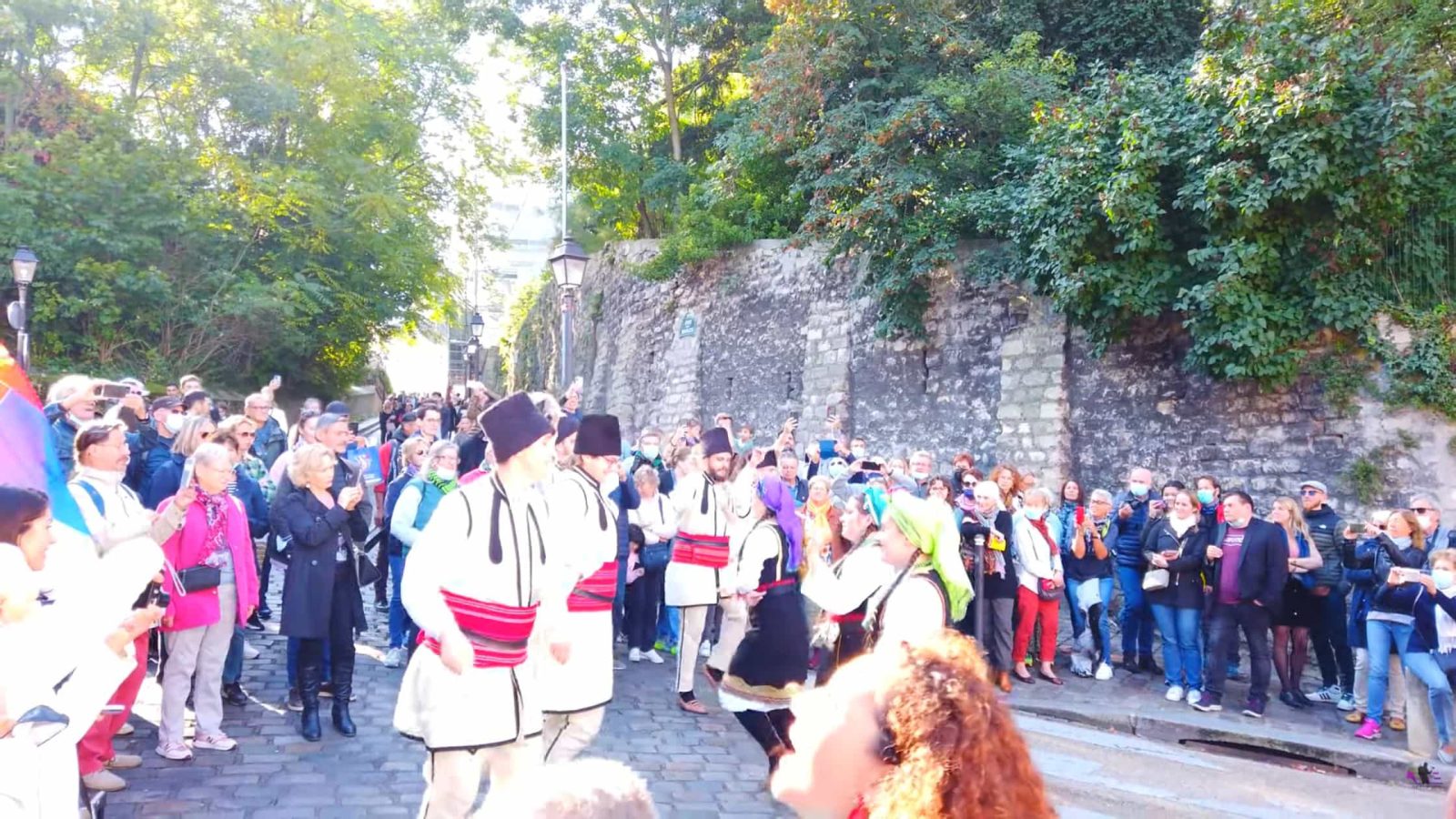
Paris is preparing to celebrate one of its most distinctive autumn traditions as the Montmartre Grape Harvest Festival 2026 returns from October 7 to October 11, 2026, bringing five days of music, food, culture, wine, street performances and community celebrations to the French capital.
Known locally as the Fête des Vendanges de Montmartre, the festival will celebrate its 93rd edition in 2026. The event is centered around Montmartre and the 18th arrondissement, with many activities taking place around the famous Sacré-Cœur Basilica, the Clos Montmartre vineyards and other neighborhood venues.
This year's theme is “Le 18e donne le rythme”, which can be translated as “The 18th sets the rhythm.” Music is therefore at the heart of the 2026 edition, with concerts, chorales, fanfares, musical performances, neighborhood celebrations and festive gatherings planned throughout the arrondissement.
For visitors looking for something beyond the traditional postcard version of Paris, the festival offers an opportunity to experience Montmartre as a lively neighborhood rather than simply a tourist attraction. The streets around the hill, vineyards and Sacré-Cœur will become part of a city-wide celebration combining gastronomy, music, local heritage and the historic grape harvest tradition.
Montmartre Grape Harvest Festival 2026: Key Details
Event: Fête des Vendanges de Montmartre / Montmartre Grape Harvest Festival
Dates: October 7–11, 2026
Location: Montmartre and the 18th arrondissement, Paris
Main area: Around Sacré-Cœur and the Clos Montmartre vineyards
2026 theme: “Le 18e donne le rythme”
Edition: 93rd
Main attractions: Parcours du Goût, Grand Défilé, Ban des Vendanges, vineyard tours, concerts, chorales, community events and closing celebrations
Admission: Many of the festival's public events are free, although some activities require advance registration.
Why the Montmartre Grape Harvest Festival Is Important to Paris
The Montmartre Grape Harvest Festival is not simply a food market or a wine celebration. It is deeply connected with the history of the neighborhood and the preservation of the Clos Montmartre vineyard.
According to the festival's historical information, vineyards have been associated with Montmartre for centuries. The first vineyards are traced back to the 12th century, when the ladies of the Abbey of Montmartre planted vines and developed wine production in the area.
The history of the modern festival is more recent. New vines were planted in 1933, helping preserve land that was facing a potential real-estate development. The first Fête des Vendanges de Montmartre was celebrated in 1934, under the patronage of entertainers Mistinguett and Fernandel.
That history helps explain why the event continues to feel different from a conventional city festival. The vineyards are not simply a decorative backdrop. They represent a surviving piece of Montmartre's agricultural and cultural history.
Over the decades, the festival expanded beyond the immediate vineyard area. In 2008, the festivities were extended across the wider 18th arrondissement, bringing schools, associations, cultural organizations, businesses and neighborhood communities into the celebration.
How Big Is the Montmartre Grape Harvest Festival?
The festival has grown into one of the major public events in Paris.
The official festival describes the Fête des Vendanges de Montmartre as the third Parisian event in terms of attendance, after Paris-Plages and Nuit Blanche.
Visitor figures can vary depending on whether the figure refers to expected attendance, total participation or particular festival areas. For example, the 2025 edition attracted nearly 492,000 participants, according to the 18th arrondissement town hall. The Parcours du Goût alone was visited by more than 492,000 people across its three days in 2025, according to the same municipal report.
Some 2026 tourism listings describe the broader event as attracting or bringing together around 1.5 million visitors, while other recent descriptions put expected attendance closer to 500,000.
For that reason, the safest way to understand the festival's scale is that it is one of Paris's largest recurring public celebrations, drawing hundreds of thousands of people and spreading activity across the 18th arrondissement.
The 2026 Theme: “The 18th Sets the Rhythm”
Music will be the defining feature of the 2026 festival.
The official organizers say the theme “Le 18e donne le rythme” puts music at the center of the celebration as a universal language connecting generations, cultures and communities. The program includes concerts, choirs, balls, musical walks, performances and neighborhood events.
This means visitors should not expect all the action to be concentrated around the Sacré-Cœur. The festival has developed into a wider celebration throughout the arrondissement.
That approach also gives the event a stronger community character. Local residents, artists, associations, shops and cultural venues participate alongside visitors.
The result is a festival that can be experienced in different ways. One visitor might spend the day tasting regional products around Sacré-Cœur, another might explore the Clos Montmartre vineyards, while someone else could follow concerts and neighborhood performances across the 18th arrondissement.
Parcours du Goût: The Food and Wine Heart of the Festival
For many visitors, the Parcours du Goût will be one of the biggest attractions of the 2026 Montmartre Grape Harvest Festival.
Held around Sacré-Cœur, the Parcours du Goût brings together producers, winemakers and artisans from across France. The official festival describes it as a meeting place for regional specialties, local discoveries, culinary traditions and new inspirations.
The experience is designed around walking, tasting and discovering.
Instead of visiting one traditional restaurant, visitors can move between different stalls and producers, discovering regional products and talking directly with exhibitors.
The 2026 Parcours du Goût is scheduled for October 9, 10 and 11. The official program currently lists it around Sacré-Cœur, with the event running during the daytime and into the evening on the main days.
The exact atmosphere is part of its attraction. Montmartre's steep streets, historic architecture and views across Paris provide the backdrop while food producers and artisans create a temporary open-air marketplace.
The festival is also emphasizing sustainability in 2026, with eco-responsible partners involved in efforts related to waste reduction and more local, circular practices.
The Clos Montmartre Vineyards
The Clos Montmartre vineyards are arguably the most important symbol of the festival.
Montmartre is famous for its artistic history, cafés and Sacré-Cœur, but fewer visitors realize that a small vineyard still exists on the hill.
The vineyard is located around Rue des Saules, near the historic heart of Montmartre. The festival offers visitors a chance to learn more about its history through guided tours.
In 2026, vineyard tours are scheduled on October 7, October 8, October 9 and October 11, with different times depending on the day. The tours last approximately 45 minutes and are conducted with historian and lecturer Jean-Manuel Gabert.
Because of limited capacity, these tours require reservations. The official website currently indicates that the listed vineyard tours are fully booked, although places can become available if cancellations occur.
For travelers who want to understand the historical side of the festival, however, the vineyard remains an important place to visit even without joining a guided tour.
The Ban des Vendanges Marks the Harvest
One of the traditional highlights of the festival is the Ban des Vendanges, which formally marks the beginning of the harvest.
The 2026 Ban des Vendanges is scheduled for Saturday, October 10, at the Clos Montmartre vineyards. The official program places the event in the morning.
The ceremony connects the modern festival with the agricultural tradition that gave it its name.
Although Montmartre today is one of the world's most recognizable urban neighborhoods, the presence of its vineyard creates a fascinating contrast. Modern Paris surrounds a small working vineyard that continues to produce its own local wine.
The wine produced from the Clos Montmartre is also connected to the social mission of the arrondissement. According to the festival's history, the COFAS organization is responsible for the wine-making process, bottling and commercialization of the Clos Montmartre vintage, with proceeds benefiting social initiatives in the district.
The Grand Parade: One of the Festival's Most Photogenic Moments
Another major attraction is the Grand Défilé, or Grand Parade.
The parade brings together wine and gastronomic brotherhoods, local groups and participants in colorful costumes. The procession moves through Montmartre and connects the celebration with the traditions of the French countryside and harvest festivals.
The parade is particularly attractive for photographers and visitors who want a visual experience of the festival.
In 2025, the Grand Défilé included 1,500 participants and 54 brotherhoods, according to the 18th arrondissement town hall.
The 2026 edition is again expected to be one of the key weekend moments, making Saturday, October 10, an especially important day for visitors planning their trip.
Concerts, Chorales and the New Scène des Vendanges
Music takes an even bigger role in the 2026 edition through the Scène des Vendanges at the Arènes de Montmartre.
The program includes concerts, choir performances, sensory wine experiences and a conference. On Friday, October 9, the schedule includes an acoustic concert titled “Sous le ciel de Paris”, followed by a choir performance. Saturday features another choir and an oenotourism and sensory experience, while Sunday includes another sensory session and a conference.
The festival's official program also includes musical activities in other parts of the arrondissement.
For example, the Symphonie urbaine – La grande fanfare is scheduled for October 9 at Le Grand Parquet, bringing brass and percussion into the La Chapelle and Marx Dormoy area.
This wider musical program reflects the central idea of the 2026 edition: Montmartre is not simply hosting a festival around one stage. The entire 18th arrondissement becomes part of the celebration.
A Festival for Families Too
Despite its reputation for wine, food and adult nightlife, the Montmartre Grape Harvest Festival also has a significant family component.
The 18th arrondissement's municipal website highlights dedicated programming for children and families during the five-day celebration.
The October 7 schedule, for example, includes La Boum des bambins, a children's celebration bringing together children from leisure centers in the 18th arrondissement.
This family focus is important because the modern festival is much broader than a traditional wine event. It includes music, visual arts, community activities, performances and cultural experiences suitable for different age groups.
Parents visiting Paris in October can therefore build a festival day around family-friendly activities rather than focusing exclusively on wine tasting.
Special Events Across the 18th Arrondissement
The official program contains many smaller events that could easily be missed by visitors who only search for the main festival attractions.
One example is “Les marches donnent le ton”, a visual project in which stairways on Rue du Mont-Cenis are decorated with artwork created by children from schools in the arrondissement. The installation runs throughout the festival from October 7 to October 11.
The festival's OFF program also includes additional cultural activities across the neighbrhood.
Among the 2026 OFF events are special visits connected with the Moulin Rouge, exhibitions, artistic programs and neighborhood celebrations.
This is one reason visitors may want to look beyond the headline events. The festival is designed as a neighborhood-wide cultural program, and some of its most interesting experiences may happen away from the busiest streets around Sacré-Cœur.o
Where Is the Montmartre Grape Harvest Festival Held?
The festival is based in Montmartre in Paris's 18th arrondissement, but it is not limited to a single venue.
The area around Sacré-Cœur is one of the principal locations, particularly for the Parcours du Goût. The official festival information lists streets and public spaces around the basilica, including Rue Azaïs, Rue Saint-Eleuthère, Rue Cardinal Guibert and Rue Cardinal Dubois.
The Clos Montmartre vineyard is another major location.
Other venues include the Arènes de Montmartre, Place des Abbesses, Square Louise Michel, Le Grand Parquet and various cultural and community locations across the 18th arrondissement.
Because the festival is distributed across the neighborhood, comfortable shoes are a practical choice. Montmartre is famous for its stairs and steep streets, and visitors may spend much of the day walking between different locations.
How to Get to the Festival
Public transportation is generally the most practical way to reach the main festival areas.
The official festival information identifies Abbesses and Lamarck-Caulaincourt as useful Metro stations for the area around Sacré-Cœur and the Parcours du Goût.
For the Clos Montmartre vineyard, Lamarck-Caulaincourt is also a useful Metro connection. The official vineyard information lists Metro Line 12 and several bus options, including Bus 40 and Bus 80.
Visitors should expect heavy pedestrian traffic around the busiest festival locations, especially during the weekend.
Rather than attempting to drive directly to Sacré-Cœur, travelers staying elsewhere in Paris may find it easier to use the Metro and walk the final part of the journey.
Is the Montmartre Grape Harvest Festival Free?
Many of the public festival activities are accessible without an admission ticket.
Paris tourism information describes the event as a free public celebration, although some individual activities have limited capacity and require registration.
For example, the vineyard tours require reservations and can fill quickly. The Scène des Vendanges also operates with registration and limited capacity.
The Parcours du Goût is different because visitors can walk through the open-air food and producer area, although individual food and drink purchases are naturally separate from event admission.
Anyone planning to attend should check the official program shortly before visiting because schedules, availability and access arrangements can change.
What Makes the 2026 Edition Different?
The biggest difference in 2026 is the stronger musical identity of the festival.
The theme “Le 18e donne le rythme” is reflected throughout the program, from choirs and concerts to fanfares, musical walks and closing celebrations.
The organizers are also emphasizing sustainability, local initiatives and accessibility. The official festival description highlights responsible food practices, waste reduction, softer mobility and support for local know-how.
The 2026 edition also includes measures related to visitor safety and the fight against sexual and gender-based violence. The 18th arrondissement town hall says that two safe places will be available around the Parcours du Goût during the festival.
These details show how the event has evolved. What began as a celebration of the Montmartre grape harvest has become a large cultural event combining heritage with contemporary urban life.
Best Time to Experience the Festival
Visitors who want to see the festival at its busiest should consider the weekend of October 10–11.
The Parcours du Goût is operating across the weekend, while Saturday includes the Ban des Vendanges and the Grand Parade. Sunday brings additional activities and the closing celebrations.
Those who prefer a quieter introduction to the festival may consider Wednesday or Thursday, when the program includes smaller cultural and neighborhood activities.
The choice ultimately depends on what visitors want to experience. The weekend offers the strongest concentration of major events, while the earlier days can provide a different view of the neighborhood and its cultural programming.
Why Travelers Should Explore Beyond Sacré-Cœur
Sacré-Cœur is naturally going to be the visual center of many visitors' trips to Montmartre. But the festival's 2026 program makes a strong case for exploring beyond the basilica.
The 18th arrondissement contains a mixture of historic streets, cultural venues, cafés, artistic spaces and residential neighborhoods. During the festival, these areas become part of the wider celebration.
The expansion of the Fête des Vendanges beyond the immediate vineyard area has been an important part of its development. Since 2008, the event has involved neighborhoods throughout the arrondissement.
For travelers, this creates a more authentic opportunity to experience the local character of Montmartre and surrounding neighborhoods.
Montmartre in October: What Visitors Can Expect
October is an attractive time to explore Paris, but visitors should prepare for variable autumn weather.
The festival is largely an outdoor experience, with street performances, markets, parades and walking between venues. Comfortable footwear and a light waterproof layer can therefore be useful.
Crowds are another consideration. The festival's popularity means that the area around Sacré-Cœur can become extremely busy, particularly when major activities and the Parcours du Goût are taking place.
Visitors who want to take photographs should consider arriving earlier in the day, while those interested in evening music and food can plan to remain in the neighborhood after sunset.
The most important thing is to avoid treating the festival as a single attraction with a single entrance. It is a five-day citywide neighborhood celebration, and the best experience can come from combining several smaller activities.
Montmartre Grape Harvest Festival 2026 FAQ
When is the Montmartre Grape Harvest Festival 2026?
The Montmartre Grape Harvest Festival 2026 takes place from Wednesday, October 7 through Sunday, October 11, 2026, in Paris's 18th arrondissement.
Where is the Montmartre Grape Harvest Festival held?
The festival takes place throughout Montmartre and the 18th arrondissement, with major activities around Sacré-Cœur, the Clos Montmartre vineyards and several neighborhood venues.
What is the theme of the 2026 festival?
The theme is “Le 18e donne le rythme,” meaning “The 18th sets the rhythm.” Music is the central theme of the 2026 edition.
What is the Parcours du Goût?
The Parcours du Goût is the festival's major food and producer event around Sacré-Cœur. It brings together producers, winemakers and artisans offering regional specialties and culinary discoveries.
Is the Montmartre Grape Harvest Festival free?
Many public events are free, although certain activities, including vineyard tours and some programmed sessions, require registration and may have limited capacity.
Can visitors tour the Clos Montmartre vineyard?
Yes. The festival schedules guided vineyard visits on selected days. However, the official website currently indicates that the listed 2026 tours are fully booked, with possible places becoming available if cancellations occur.
When is the Grand Parade?
The Grand Défilé is one of the major traditional events associated with the festival and is scheduled as part of the weekend program. Visitors should consult the official 2026 timetable for the latest route and timing before attending.
Is the festival suitable for families?
Yes. The 2026 program includes activities specifically aimed at children and families, alongside the broader cultural and musical program.
How do I reach the Parcours du Goût?
The Parcours du Goût is held around Sacré-Cœur. Abbesses and Lamarck-Caulaincourt are among the useful Metro stations listed by the official festival information.
What should visitors expect at the festival?
Visitors can expect a combination of food markets, wine-related activities, concerts, parades, cultural events, neighborhood celebrations and opportunities to discover Montmartre's historic vineyard tradition.
The Montmartre Grape Harvest Festival 2026 offers a very different way to experience Paris in autumn. From October 7 to 11, Montmartre and the wider 18th arrondissement will combine the area's historic vineyard tradition with music, food, art and community celebrations for the festival's 93rd edition.
The Parcours du Goût, Clos Montmartre vineyard, Ban des Vendanges, Grand Parade, concerts and closing events provide plenty of reasons to visit, while the 2026 theme “Le 18e donne le rythme” gives the celebration a strong musical identity.
For travelers, the most interesting aspect may be that the event is much bigger than a traditional grape harvest celebration. It has become a neighborhood-wide expression of Montmartre's history and contemporary culture, bringing together residents, artists, producers, performers and visitors.
If you are planning a Paris trip in October 2026, the festival provides an opportunity to see Montmartre beyond Sacré-Cœur and the usual tourist itinerary—through its streets, food, music, vineyard and local traditions. With hundreds of thousands of people expected to participate, the Fête des Vendanges de Montmartre is set to once again turn the 18th arrondissement into one of the liveliest parts of Paris for five days.